NEM 3.0 Explained: What California Homeowners Need to Know in 2025
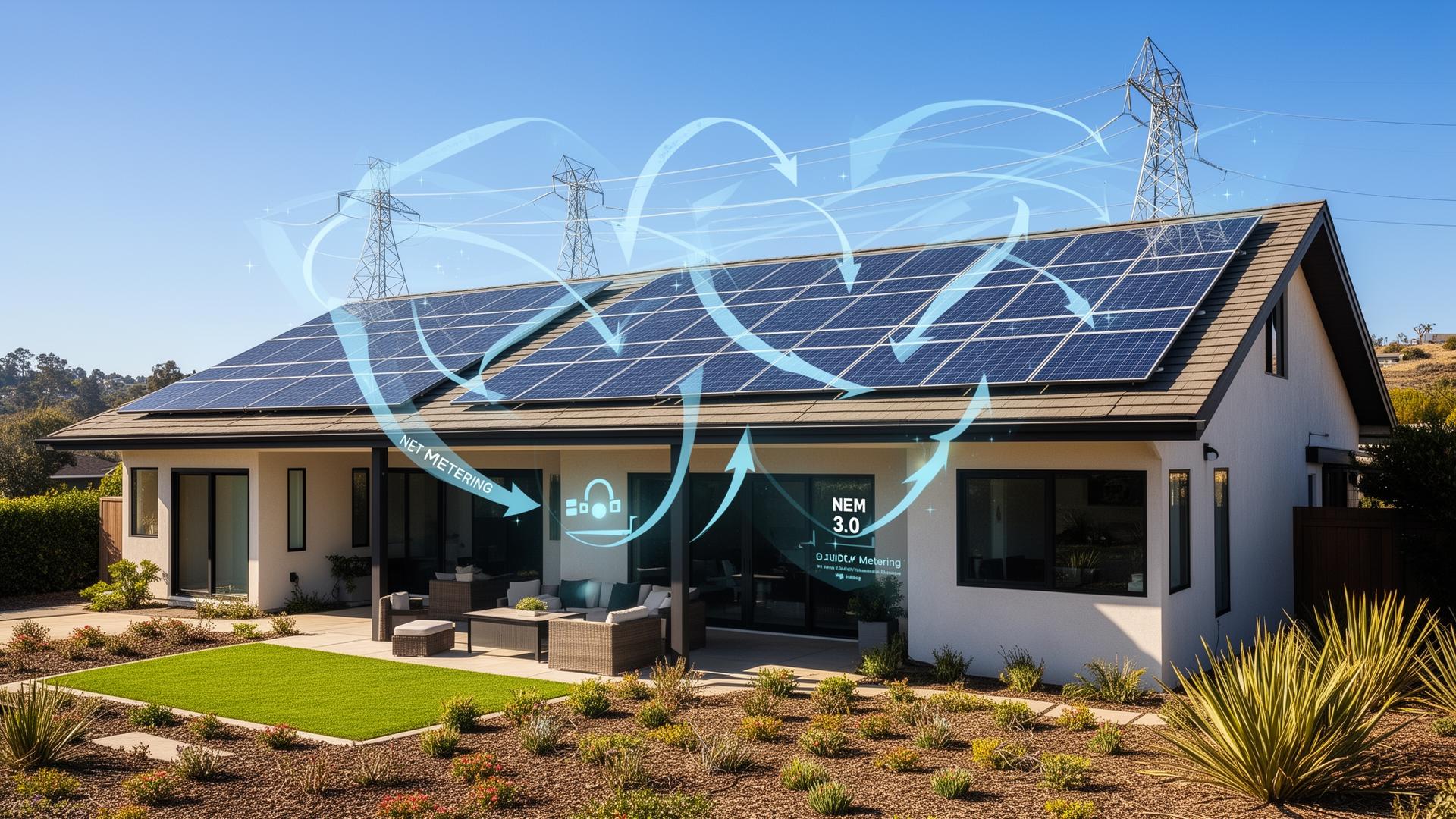
NEM 3.0 Explained: What California Homeowners Need to Know in 2025
If you're a California homeowner thinking about solar—or already have it—it's time for a heart-to-heart about NEM 3.0. This isn't just another energy policy acronym. It's a real financial shift that affects how your solar system earns money, how quickly it pays itself back, and how you plan your energy future.
Let's break it down like we're talking over coffee — clear, honest, and with your best interests at heart.
What Is NEM 3.0 (And Why You're Hearing About It)
NEM 3.0 stands for Net Energy Metering 3.0, California's newest version of the solar export program — legally called the Net Billing Tariff (NBT). It replaced the older NEM 1.0 and NEM 2.0 programs for new solar systems starting in April 2023.
Under the older rules, solar customers were credited at full retail rate for electricity they sent back to the grid. That meant big credits — and often a payoff in 5–7 years.
Under NEM 3.0, those credits are calculated differently using something called an Avoided Cost Calculator, which reflects the value the utility actually avoids by using your solar energy instead of buying or generating power elsewhere. That value is often much lower than the retail rate you pay for electricity.
In human terms?
👉 You still get credited for excess solar energy — just not as much.
How NEM 3.0 Changes Your Solar Savings
Right away, let me be clear: solar still saves you money. But the math has shifted.
💡 Lower Export Credits
Under NEM 3.0, the amount you get credited for sending energy back to the grid is dramatically lower — on average roughly 75% less than under NEM 2.0.
That means:
- Your payback period is longer — more like 8–10 years without batteries.
- You earn less just by exporting energy — so your system is judged less on credits and more on how much solar you use yourself.
🌅 Time-Of-Use Matters
Instead of flat export rates, NEM 3.0 gives you credits that vary by time of day and season — with hundreds of possible rate combinations tied to utility demand.
Translation: The energy you send back during high-demand hours (like summer evenings) is worth more — potentially significantly more — than midday exports.
So smart scheduling — or storing your solar with a battery — suddenly becomes incredibly important.
The Battery Advantage: NEM 3.0's Silver Lining
If NEM 3.0 had a motto, it might be: "Store it first, export it second."
Why?
Because with export credits so low, the best way to maximize savings under NEM 3.0 is to use your solar energy where it's most valuable — in your home — and only send excess back during high-value times.
That's where battery storage comes in:
- Store daytime solar instead of exporting it
- Discharge in early evening when grid power is most expensive
- Reduce your peak-rate electricity use
- Maximize self-consumption — big savings!
In fact, experts now see solar-plus-storage systems achieving shorter payback periods than solar alone.
Who Is (And Isn't) Affected
Here's a key point: If your system was interconnected before April 15, 2023, you keep the old NEM 2.0 credits for 20 years. That's called grandfathering.
But if your system was installed after that date — or you plan to install one now — NEM 3.0 applies.
NEM 3.0 currently applies to customers of the three major investor-owned utilities:
- PG&E
- Southern California Edison (SCE)
- San Diego Gas & Electric (SDG&E)
Municipal utilities like SMUD and LADWP aren't under NEM 3.0 — yet — but they could adopt similar terms in the future.
Is Solar Still Worth It in California in 2025?
Short answer: Yes. Absolutely… with the right strategy.
Here's why:
- ✅ California still has some of the highest electricity rates in the country — so solar saves more.
- ✅ Federal incentives like the 30% Investment Tax Credit are still available (though timing matters).
- ✅ Battery storage now meaningfully improves your economics.
- ✅ The value of self-consumption — powering your own home with your own energy — has never been clearer.
The game has changed — but solar is still a solid investment in California. It just has shifted toward smart design, storage integration, and timing your exports for peak value.
Actionable Tips for California Homeowners
Here's what that warm, genuine solar adviser voice would tell you today:
- 🔹 Review your electric usage patterns — midday vs. evening peaks matter now.
- 🔹 Pair solar with a battery to capture your best value.
- 🔹 Ask your installer about time-of-use optimization strategies.
- 🔹 If you're pre-2023 grandfathered in NEM 2.0, don't lose it — protect it.
Solar isn't dead — it's evolved. And evolution rewards those who prepare and adapt.
FAQs — Your Burning Questions, Answered
Q: Does NEM 3.0 require a battery?
A: No — but you're leaving money on the table if you don't use one under the new export structure.
Q: Will NEM 3.0 change again?
A: There's a legal challenge underway — the California Supreme Court sent the case back for reevaluation — but no rule change has taken effect yet.
Q: Can I still add panels without losing NEM 2.0?
A: Small system changes typically won't affect grandfathered status, but big upgrades might. Always check with your utility.
Final Thought
NEM 3.0 didn't end California solar — it sharpened the rules. And in every challenge lies opportunity. It's about designing smarter systems, using your energy more wisely, and future-proofing your home for the next decade.
If you want a custom evaluation of how NEM 3.0 affects your home — and how to maximize every ray of sunshine — I'm here to help.
Let's unlock the true value of your solar investment together. 🌞⚡
Ready to Start Saving with Solar?
Join 30,000+ California and Texas homeowners already saving with ESP Solar.
Get Your Free Quote